


MOT Fails You Can Prevent for Under £50: Cheap Checks Before Test Day
6 min read
Spending fifteen minutes running through a few basic pre-test checks can reduce the risk of these cheap, avoidable failures. Taking the time to look over your vehicle now means you can drop it off at the test centre with confidence.
The Quick Answer: Many MOT fails can be prevented for under £50 by checking bulbs, wiper blades, screenwash, number plates, tyre pressure, tyre tread, and dashboard warning lights before test day. These are quick checks most drivers can do at home — replacing small items early can help you avoid a failed test, garage mark-ups, and a possible retest. Use our registration lookup tool to find the correct road-legal parts for your vehicle before ordering.
Before you book your MOT, run through these quick checks:
Turn your ignition on and check your dashboard before and after you start the engine. Warning lights for ABS, Electronic Stability Control (ESC), or the engine management system can result in an MOT fail if they indicate a fault. For your Tyre Pressure Monitoring System (TPMS), start with tyre pressure — a TPMS light may simply mean one or more tyres are low, but a TPMS system that is malfunctioning or obviously not working can be recorded as a major defect.
If your TPMS light stays on, check your tyre pressures first. Inflate all tyres to the manufacturer's recommended PSI, usually found on the sticker inside the driver's door pillar, fuel flap, or vehicle handbook. Some cars clear the warning automatically after driving, while others need a dashboard reset. If the light goes out, you may have dodged the garage bill.
A basic TPMS valve service kit can be inexpensive, but a failed internal TPMS sensor is a different job. If the warning light flashes, stays on after the tyres are correctly inflated, or keeps returning after a reset, the system may need diagnosis or sensor replacement. That's when the cost can climb quickly.
A blown indicator, brake light, headlight, or number plate light can result in an MOT fail, so this is one of the easiest checks to do before test day. If all your brake lights are out, that can be classed as a dangerous defect — get it fixed before you even consider driving it away.
Pro Tip: If you're testing your lights alone, reverse close to a garage door or a reflective wall. You'll easily see if a bulb is out by watching the reflections in your mirrors.
Replacing a standard halogen bulb is quick and inexpensive. Standard replacements usually cost under £10 each, and you can often swap them out yourself in minutes.
If your car was first used on or after 1 April 1986, fitting aftermarket LED bulbs into a halogen headlamp unit can result in an MOT fail unless the full compatible headlamp unit has also been changed. That means you could end up paying for the wrong bulbs, the correct replacements, and a retest. If the bulb works but the lamp unit itself is cracked, damaged, or letting in moisture, check replacement headlights, rear lights, or fog lights before ordering.
If your wiper blades are clearly worn, split, missing, or not clearing the windscreen properly, they can result in an MOT fail. Your washers also need to provide enough fluid for the wipers to clear the screen effectively, so an empty screenwash reservoir or blocked washer jets can fail the test too.
A standard bottle of screenwash costs only a few pounds, so top it up before test day. If your washer jets are blocked, you can carefully clear the nozzle with a fine pin or needle — but don't force it, as this can alter the spray direction.
Leaving torn or smearing wiper blades until test day is an avoidable mistake. A new set can cost around £15 to £25, but if the test centre replaces them for you, you may pay retail price plus labour for a job you could have sorted beforehand.
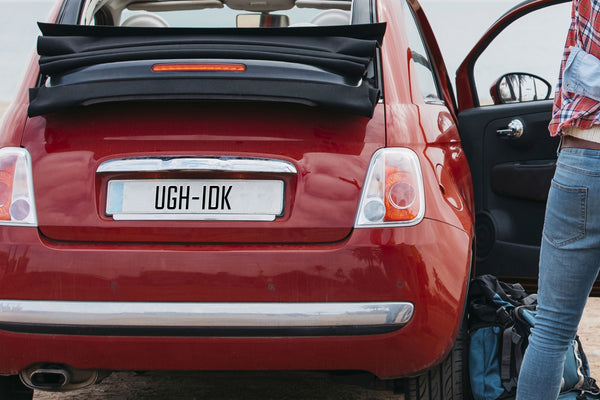
Your number plates must be secure, clearly visible, and legally displayed. If a plate is loose, excessively damaged, delaminated, obscured by dirt, or hard to read, it can result in an MOT fail. Incorrect spacing, illegal fonts, tints, films, or fixing screws that change the appearance of the characters can also cause problems.
If your plates are dirty, wipe them clean before test day. If a plate is loose but still legal and readable, tightening the screws or using proper number plate adhesive pads can usually sort it for a few pounds.
Badly cracked, faded, peeling, delaminated, or incorrectly displayed plates may need replacing before the MOT. Sorting them early gives you time to order legal replacements instead of failing the test and then paying for plates plus a possible retest.
⚠ Beyond the MOT: Driving with an unreadable number plate risks a police fine of up to £1,000, regardless of whether the car is due a test.
Tyres are one of the biggest safety checks in an MOT, so don't leave them to chance. For most passenger cars, the main tyre grooves need at least 1.6mm of tread depth across the central three-quarters of the tyre and around the full circumference. Deep cuts, bulges, exposed cords, damaged sidewalls, or tyres that are obviously unsafe can also result in an MOT fail.
You can check tread depth for free using a 20p coin. Place it into the main grooves of the tyre — if the outer band of the coin is visible, your tread may be below the legal limit and the tyre should be checked properly before the MOT. While you're there, check tyre pressure and look for cracks, bulges, nails, or uneven wear.
Tyre replacement usually won't come in under £50, especially once fitting is included. Check your tyres early so you have time to choose replacement tyres at the right price before the MOT.
| Pre-MOT Checkpoint | Typical Low-Cost Solution | Est. Component Cost | Under £50? |
|---|---|---|---|
| Bulbs & Lamps | Replace standard road-legal bulb. | Usually under £10 each | Yes |
| Wiper Blades | Replace split or streaking blades. | Around £15 to £25 per pair | Yes |
| Washers & Fluid | Top up screenwash or clear washer jets. | Usually under £10 | Yes |
| Number Plates | Clean, secure, or replace legal plates. | Usually under £50 | Yes |
| Tyre Pressures | Check pressure and inflate tyres. | Free to low-cost; gauge under £10 | Yes |
| TPMS Sensor Fault | Diagnosis or internal sensor replacement. | Usually £50+ per wheel | No |
| Damaged Tyres | Tyre replacement and fitting. | Often £50+ per tyre | No |
| ABS / Engine Lights | Diagnostic scanning and repair. | Variable garage cost | No |
Q: Will a blown bulb fail my MOT?
Yes, it can. A blown mandatory light — such as an indicator, brake light, headlight, rear light, or number plate light — can result in an MOT fail. If all your brake lights are out, that can be classed as a dangerous defect, meaning the vehicle should be repaired before it is driven again.
Q: Can I fix a TPMS warning light myself?
Sometimes, yes. If the light is caused by low tyre pressure, inflating the tyres to the correct PSI may clear it — either automatically after driving or after a dashboard reset. If the TPMS light flashes, stays on after the pressures are correct, or keeps coming back, the system may be malfunctioning and could be recorded as a major defect during the MOT.
Q: Can a dirty number plate fail an MOT?
Yes. Your registration plates must be fully legible from a distance. If they are covered in dirt, use non-standard spacing, feature an illegal font, or are hard to read, this can be recorded as a major defect. Beyond the MOT, driving with an unreadable plate risks a police fine of up to £1,000.
Q: Do LED bulbs fail an MOT?
They can. If your vehicle was first used on or after 1 April 1986, a halogen headlamp unit should not be converted to use aftermarket LED bulbs unless the full compatible headlamp unit has also been changed. To stay on the safe side, use the bulb type your headlamp was designed for.
Q: Is an MOT the same as a service?
No, they are completely separate. A service changes out wear-and-tear items like engine oil and filters to maintain mechanical longevity. An MOT is a mandatory safety inspection that checks specific vision, emission, and structural components against minimum legal standards.
Running these simple, low-cost checks before your test date helps reduce the risk of your car getting caught out by easy, avoidable failures. While a quick inspection won't magically repair an engine management fault, suspension issue, or structural problem, it helps make sure you are not paying for retests because of a worn wiper blade or blown bulb.
Don't leave fitment to chance before test day. Use the registration lookup tool on our site to find the correct road-legal parts for your vehicle before you order.
This guide is for general pre-MOT checks only. If a warning light stays on or you suspect a safety issue, have the vehicle inspected by a qualified garage.
Use our registration lookup tool to find road-legal bulbs, wiper blades, and lamps that fit your vehicle exactly — and avoid paying for parts that don't.
Search Parts by Reg →
Enter your email to get 5% off your first order.
Thanks! Scratch the panel below to reveal your discount code.